

What does an Inlet Beach photographer advise clients not to wear? Bright white on everyone, solid black, neon colors, logos, very fine stripes, heavy or shiny fabrics and short, light skirts that struggle in a breeze. The reasons are simple. This beach is extremely bright, the air is seldom still and the background is so plain that clothing is noticed. What works indoors or in a garden does not always work on the sand. Here is what I suggest leaving behind, as an Inlet Beach photographer.

A Whole Group in Bright White
White is the traditional choice for beach portraits, and in small amounts it is lovely. The difficulty arises when everyone wears it. The sand here is nearly white itself, and in strong light bright white clothing can blend into it. Fabric loses its folds, and people lose their outlines.
A warmer, softer version solves this. Cream, ivory and oatmeal are slightly deeper than the sand and keep their shape. Add tan or a muted color to give contrast. You will have the same fresh, coastal feeling, with each person clearly defined against the beach. One white shirt in a group is no problem at all.
Black From Head to Toe
Black is flattering in many settings. A sunlit beach is not one of them. It absorbs light, so details vanish. It makes a hard, dark shape against a pale background. It is also hot, and an uncomfortable person does not photograph well.
If dark clothing is your preference, navy, charcoal, deep green and chocolate are better. They have depth and still show texture. Pair a dark garment with a light one. Avoid dressing one person entirely in dark colors when everyone else is in pale ones, because that person will draw the eye in every frame, whether they wish to or not.
Fluorescent Colors
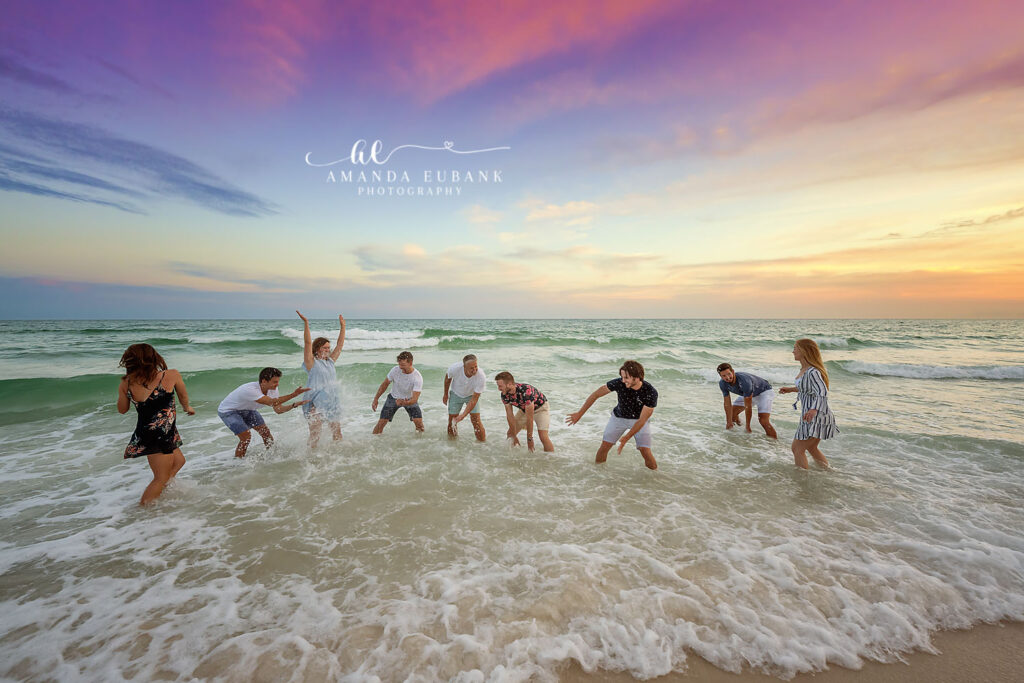
Neon pink, lime, orange and yellow are common in swimwear. In a portrait they glow unnaturally. The sand reflects them onto skin, tinting chins, arms and the people standing nearby. The effect is difficult to remove afterward.
Softer shades carry the same cheerful mood. Coral, peach, butter yellow, mint. Check children’s clothes with particular care. Neon often hides in a waistband, a hair bow, the trim of a dress or the sole of a sandal. A minute spent looking at the details before you leave the rental prevents an unwelcome surprise.
Logos and Tight Patterns
Words and logos are read before faces are seen. They also date a picture. Even a small emblem on a polo can be distracting in a close frame. Clothing without any text is always the safer choice.
Very fine stripes and tiny checks have a different drawback. On screens they can appear to shimmer or ripple. Broader, softer stripes are fine. Gentle florals are fine. If a pattern looks busy from across the room, it will look busier in a photograph. When uncertain, pick a solid, and add interest through texture instead.
Heavy or Shiny Fabric
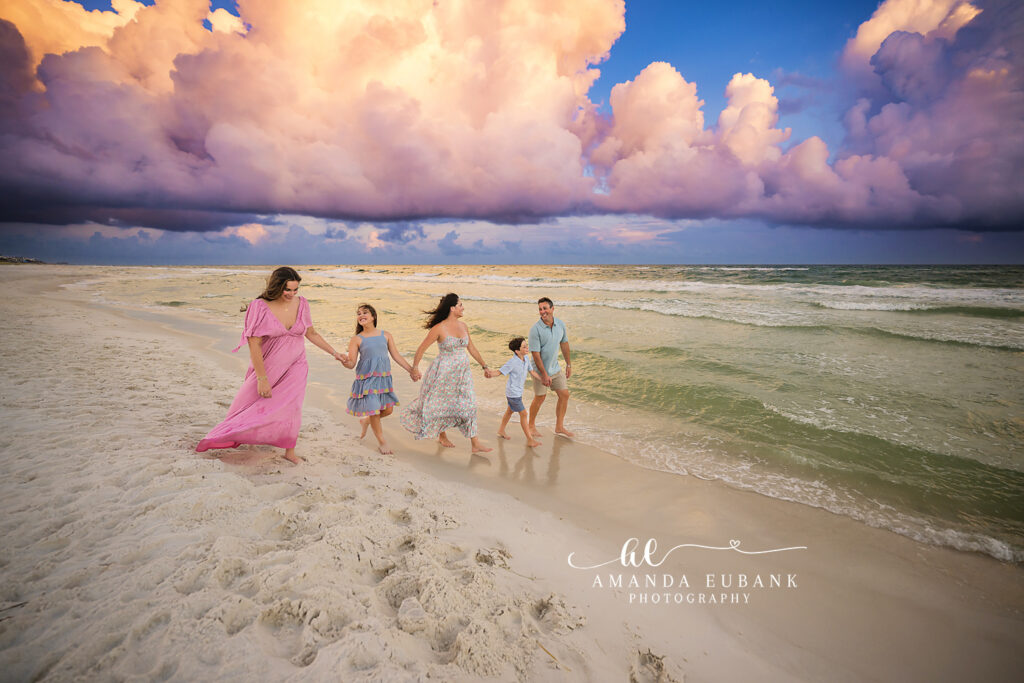
Dress for the temperature. Thick denim, corduroy and wool are a pleasure in January and a burden in July. In summer, anything heavier than cotton or linen will feel oppressive on open sand, and discomfort shows on faces.
Shine is the other issue. Satin and some polyester blends catch the bright light in patches and reveal every water mark. Matte fabrics with some texture, such as gauze, eyelet and linen, take the light softly. They are also more forgiving when the breeze presses them against you. Choose fabrics that feel pleasant to touch on a warm day.
Hems, Hats and Loose Accessories
A short, light skirt and a sea breeze do not get along. If you will be sitting on the sand or lifting children, choose more length or wear shorts beneath. Wrap dresses need a secure tie. Test for coverage at home.
Hats shade the eyes and blow away. Scarves do the same. Sunglasses hide expressions. Keep all of them for a frame or two at most. To plan a session at Inlet Beach with clothing suited to the shore, begin at the contact form or call (850) 660-3200. Further examples from the wider coast are on my 30A photographer page.