
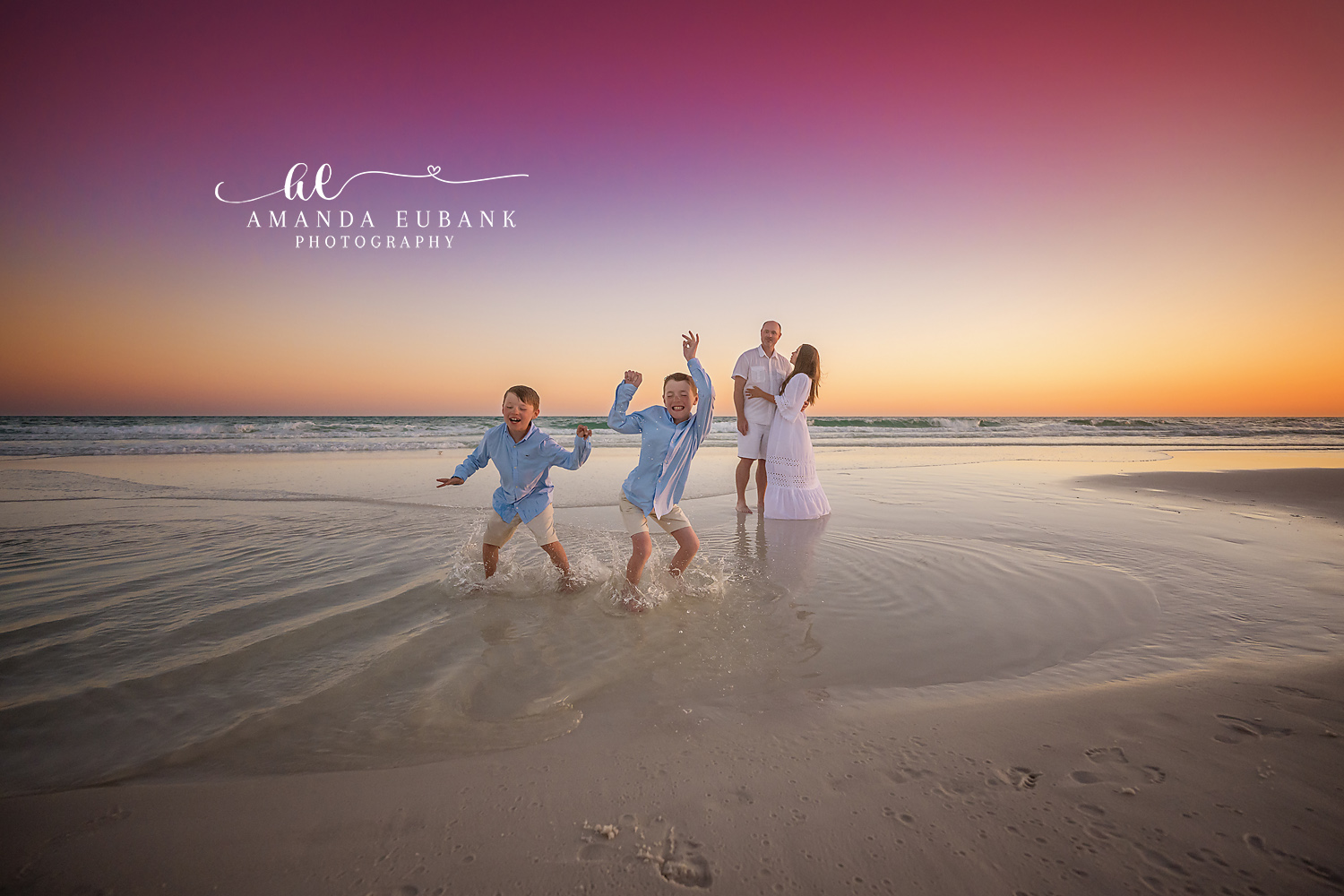
What does a Dune Allen Beach photographer advise against wearing? Stark white from head to toe, black, neon, large logos, tiny prints that shimmer, heavy fabrics, very short hemlines and anything that needs constant adjusting in a breeze. The beach is a demanding setting. It is brighter than people expect, the wind is rarely absent and the sand shows everything. Dune Allen Beach is also wonderfully plain as a backdrop, which means clothing mistakes have nowhere to hide. Here is what I steer clients away from as a Dune Allen Beach photographer.
Head-to-Toe Bright White
White seems like the natural choice for a beach, and a little of it is lovely. The trouble comes when everyone wears optic white from collar to hem. The sand here is nearly white itself, and in strong light the clothing can merge with it. Detail in the fabric washes out.
Soften the white and the problem disappears. Cream, ivory and oatmeal keep their texture. Pair them with a color or a tan so there is an edge between the person and the beach. One white piece in an outfit is fine. An entire group in bright white is what I would avoid.
Black and Very Dark Outfits
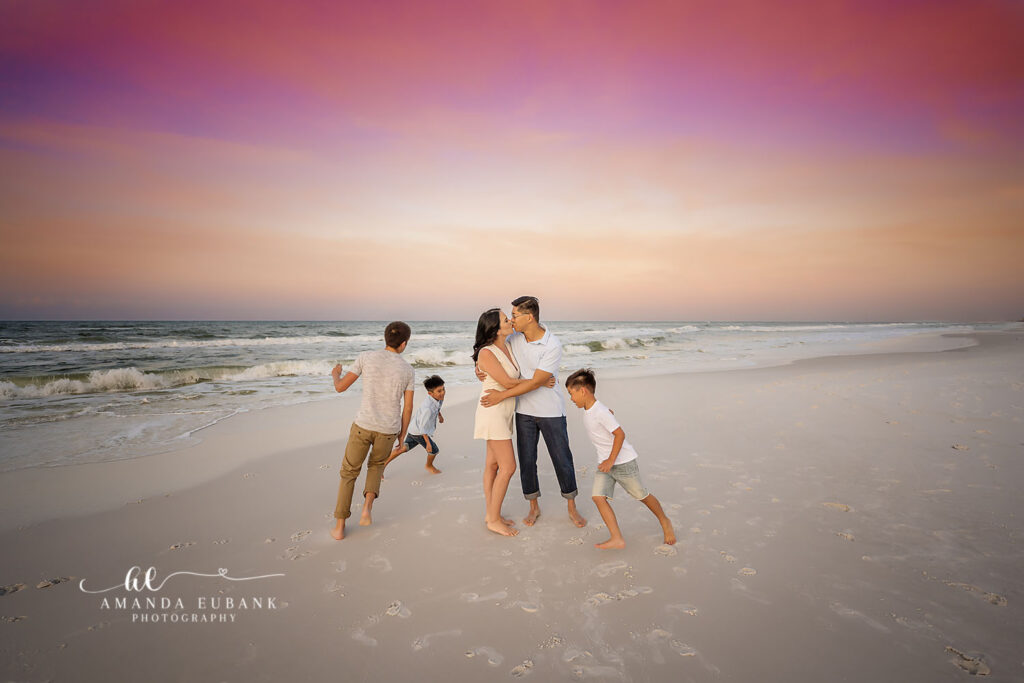
Black is slimming in the city and difficult at the beach. It soaks up light, so folds and details vanish. It looks hot, and in summer it is. Against pale sand it creates a hard, heavy shape that pulls the eye away from faces.
If you prefer dark clothing, choose navy, slate, charcoal or deep green. These have the same grounding effect and far more life. A dark piece balanced with a lighter one, such as navy trousers and a cream shirt, works well. A full black outfit rarely does on this bright shoreline.
Neon and Reflective Colors
Fluorescent pink, lime, orange and yellow are common in swimwear and vacation clothes. In a portrait they glow unnaturally and cast their color onto nearby skin. The reflective sand amplifies the effect, so a neon shirt can tint a chin, an arm or the person standing beside it.
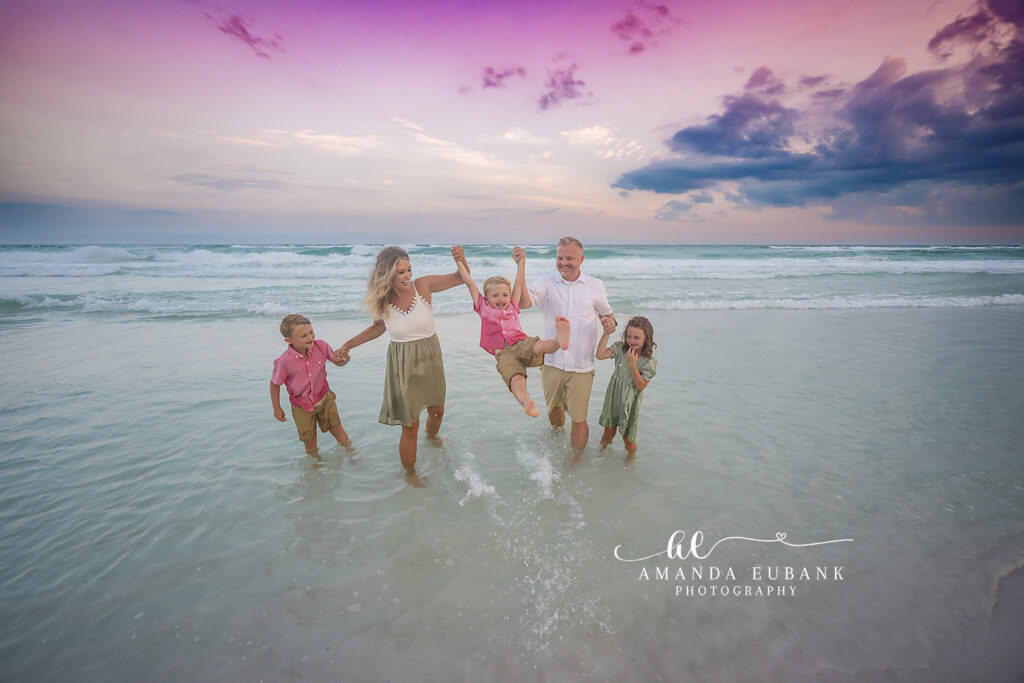
Choose a softened version instead. Coral for neon orange, blush for hot pink, sage for lime. The mood stays cheerful and the skin stays its own color. Children’s clothing is where neon most often sneaks in, so check their outfits with the same care as the adults’.
Logos, Lettering and Fine Patterns
Words and brand marks draw the eye first. A resort logo or a team name becomes the subject of the picture. Plain clothing keeps attention on people and ages far more gracefully.
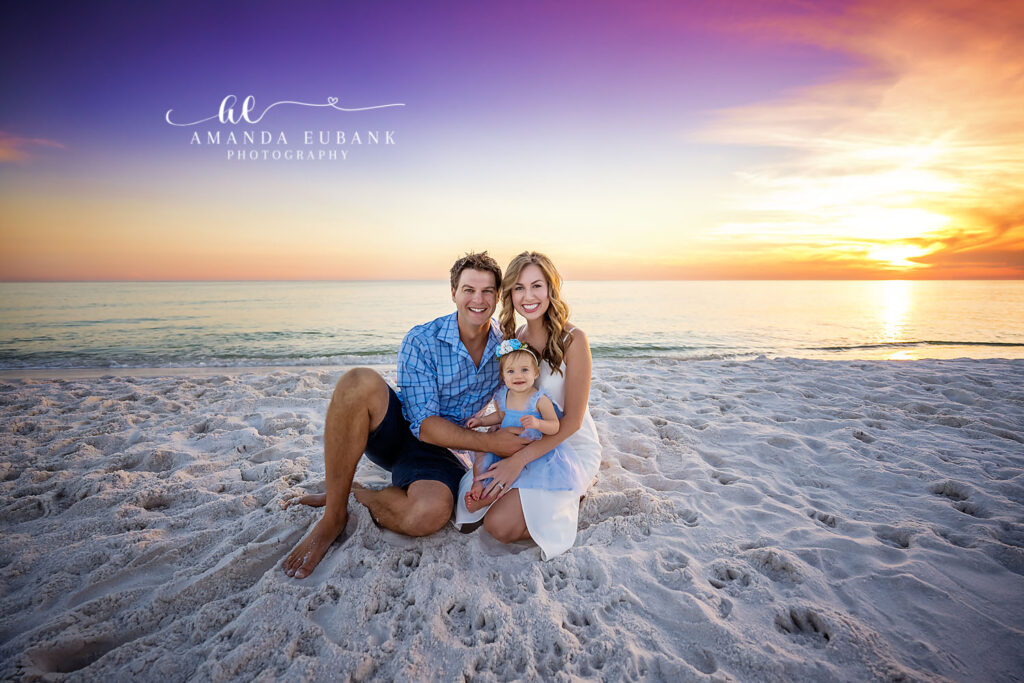
Very fine stripes and small checks cause a different issue. On screens they can produce a rippling effect. If you like pattern, choose one with a larger, softer repeat, and limit it to one or two people in a group. Florals in muted colors are usually safe. Sharp geometric prints in high contrast are the ones to leave at home.
Heavy, Shiny or Clingy Fabrics
Thick sweaters in summer, stiff suiting and heavy denim all work against you in warm, humid air. People become uncomfortable quickly, and discomfort shows. Shiny fabrics such as satin reflect the bright light in patches and reveal every drop of water.
Thin synthetic knits tend to cling in humidity and in a breeze. Natural fabrics with a little body are kinder. If you are visiting in the cooler months, layers are welcome, but choose soft textures over bulky ones. A fine sweater photographs better than a puffy jacket, and it is easier to move in.
Short Hems and Loose Hats
A breeze that makes a long skirt look beautiful makes a short one hard to control. The same is true of loose wrap dresses without a secure tie. If you will be sitting in the sand or lifting children, test the outfit for coverage before you pack it.
Hats, scarves and loose accessories tend to blow away or cast shadows on faces. Keep them for a frame or two at most. To plan a session at Dune Allen with clothing that suits the setting, begin at the contact form or call (850) 660-3200. More examples are gathered on my 30A photographer page.