
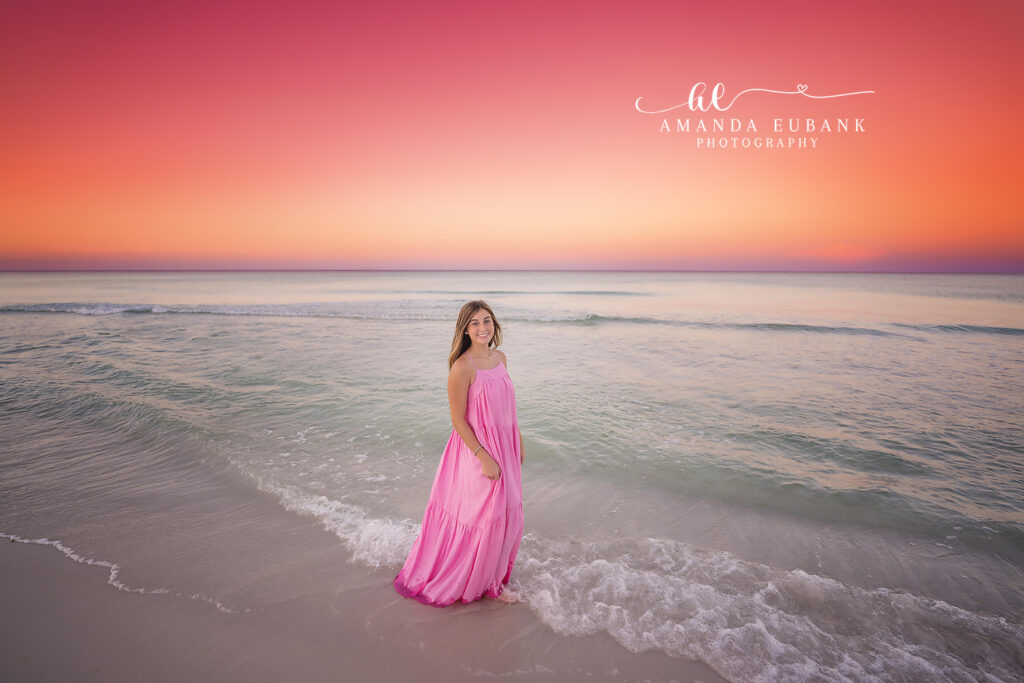
How does a Dune Allen Beach senior photographer help nervous seniors? By choosing a quiet place, starting slowly, giving them something to do and never asking for a forced smile. Most seniors are uneasy at first. They are used to phone cameras and filters, not a stranger with a large lens. After more than twenty years of photographing teenagers, I expect that hesitation and plan for it. Dune Allen Beach is a help in itself, since it is one of the calmest stretches of 30A. This is my approach as a Dune Allen Beach senior photographer.
Nerves Are Expected
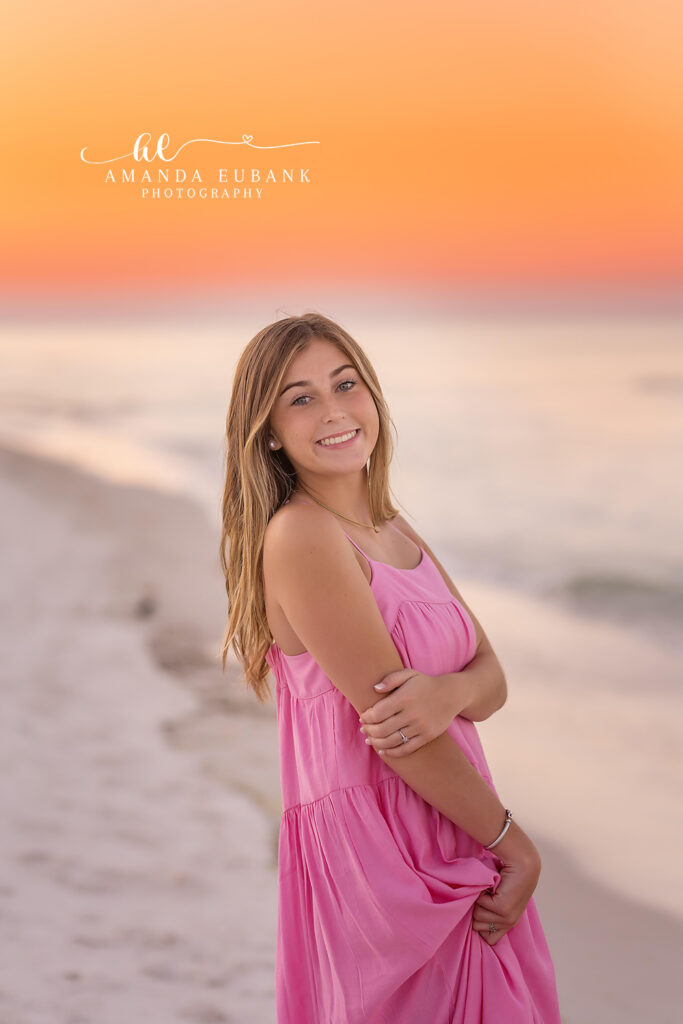
Nearly every senior tells me they are awkward in pictures. Boys often arrive because a parent insisted. Girls sometimes arrive with a fixed idea of how they should look and a fear of falling short. Both reactions are normal, and neither worries me.
I say so at the start. Knowing that nervousness is ordinary, and that I have seen it many hundreds of times, takes some of its power away. I also explain that the first few minutes are a warm-up. Nothing important depends on them, so there is no need to get anything right immediately.
A Quiet Beach Helps
Being watched makes self-consciousness worse. On a crowded public beach, a teenager can feel that everyone is staring. Dune Allen Beach rarely has that problem. Homes sit back behind the dunes, the accesses are spread out and there is usually a long stretch of sand with nobody nearby.
For an especially shy senior, I start beside a dune lake instead of on the open shore. The banks of Oyster Lake are sheltered and peaceful, and the tall grass gives a feeling of privacy. After a little while there, walking out to the Gulf feels far less exposed.
Starting With Movement
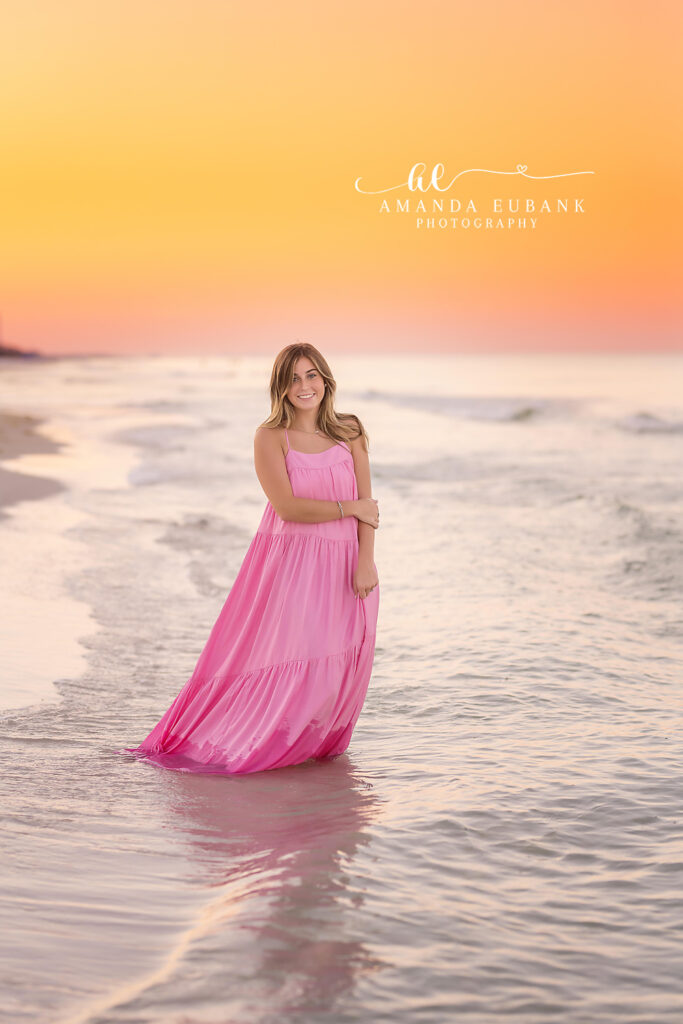
Standing still in front of a camera is the hardest thing I could ask. So I begin with walking. The senior strolls along the boardwalk or the waterline while I photograph from a distance. They can look at the sea, at their feet or back at a parent. No eye contact is required.
Movement gives the body something to do, and tension drains away. After a few passes, I ask for a pause and a glance over the shoulder. That small step usually produces the first real portrait, and the senior barely notices that the session has properly begun.
Conversation Instead of Commands
I talk throughout. I ask about plans after graduation, favorite classes, teams, music and friends. A senior who is answering a question forgets to manage their face. Expressions become natural, and I photograph between sentences.
Humor helps, particularly with boys. A bad joke at my own expense earns an eye roll and then a real smile. I never say cheese, and I do not demand a grin. Some seniors have a quieter, more thoughtful look, and I photograph that honestly. Parents frequently tell me that the serious portraits are the ones that look most like their child.
Easy Wins Early
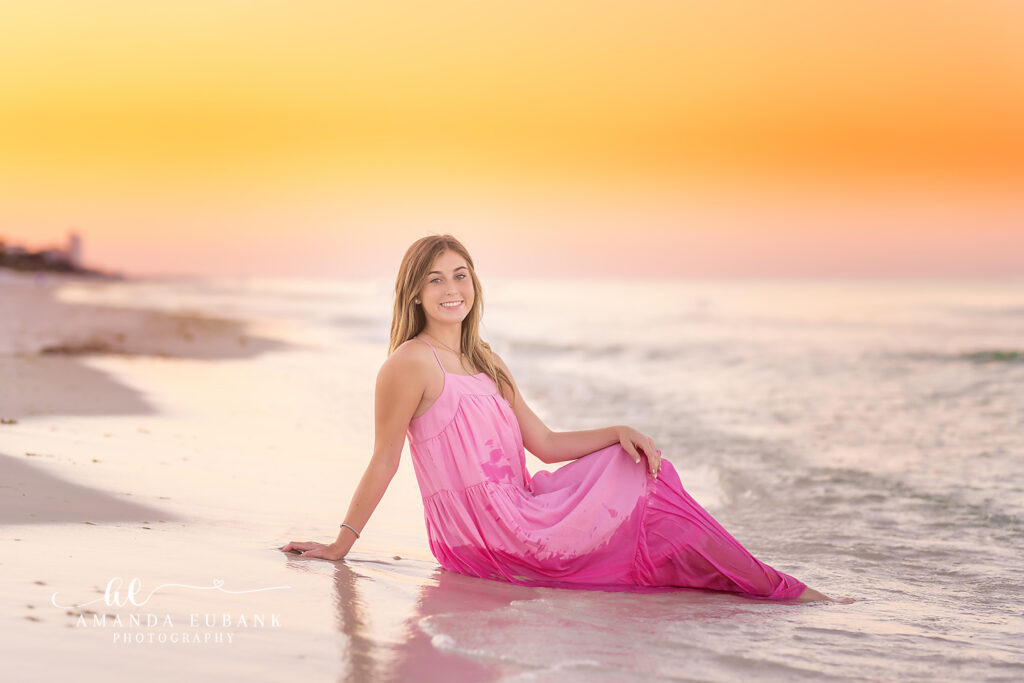
I begin with prompts that cannot go wrong, such as leaning on a rail or looking out at the water. When a frame works, I say so plainly. Teenagers are far more critical of themselves in imagination than in fact, and hearing that something looked good changes their mood quickly.
Confidence builds from there. A senior who has just been told the session is going well stands taller and tries more. By the time we reach the water for the last part of the light, most have stopped thinking about nerves altogether and are simply enjoying the beach.
How Parents Can Help
Parents are welcome, and their role matters. The most useful thing a parent can do is stay relaxed, hold the bag and let me do the directing. Comments about posture, hair or smiling, even kindly meant, make a nervous senior tighter.
Before the day, reassure your senior that nothing is expected of them except to show up as themselves. If there is a specific worry, such as braces or a blemish, tell me privately when you inquire. Reach me using the contact form or by phone at (850) 660-3200. More examples of relaxed seniors are on my Gulf Place photographer page.