
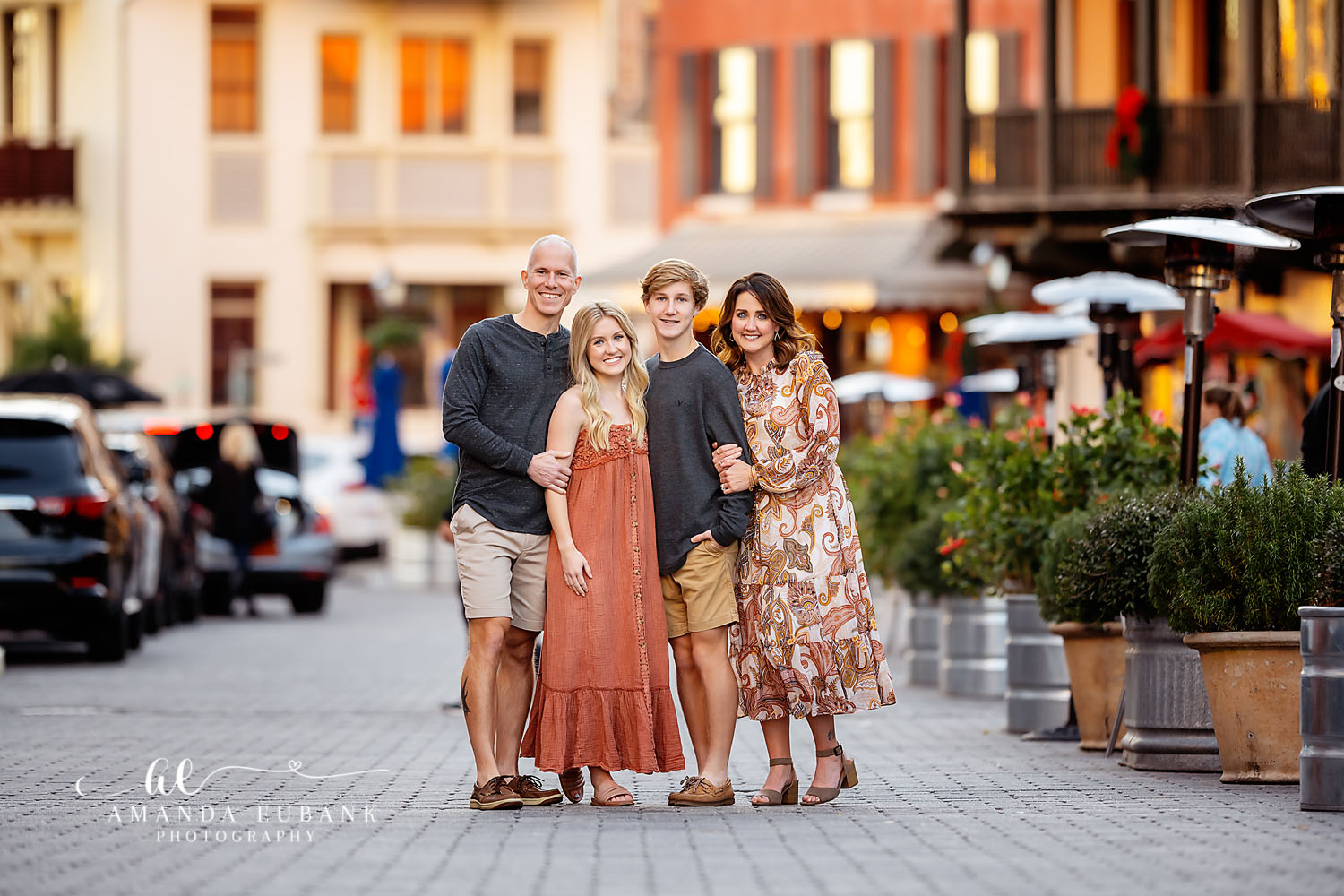
How does a Carillon Beach photographer keep strangers out of beach pictures? Through a mix of location, timing, camera angle and a willingness to walk. The setting does much of the work, since the shoreline at Carillon Beach is private to the community and sees a fraction of the traffic of a public beach. The rest is technique. An empty-looking beach in a photograph is rarely an accident, even here. It comes from dozens of small choices made during the session. These are the methods I rely on as a Carillon Beach photographer.
A Private Beach Is the First Advantage
Carillon Beach is gated, and its sand is reserved for owners and guests. On an ordinary evening that means scattered groups instead of a wall of umbrellas. Compared with the public accesses a few miles away in Panama City Beach, the difference is striking.
Fewer people on the beach gives me wide gaps to work in. I can often find a stretch with nobody in it at all simply by looking left and right from the top of the walkover. As evening comes on, those groups thin further, which leaves the sand calmer just as the light becomes its most beautiful.
Timing Around Other Beachgoers
Most people leave the beach before sunset to shower and go to dinner. By the time a sunset session reaches the water, chairs are being folded and families are heading for the stairs. The crowd thins steadily as the light improves, which works in our favor.
Sunrise is quieter still. At that hour there may be a few walkers and someone fishing, and that is all. If an empty beach matters to you more than anything else, a morning booking is the surest way to get it. Weekdays help too, since weekends bring more arrivals and more activity near the walkovers.
Walking to a Clear Stretch
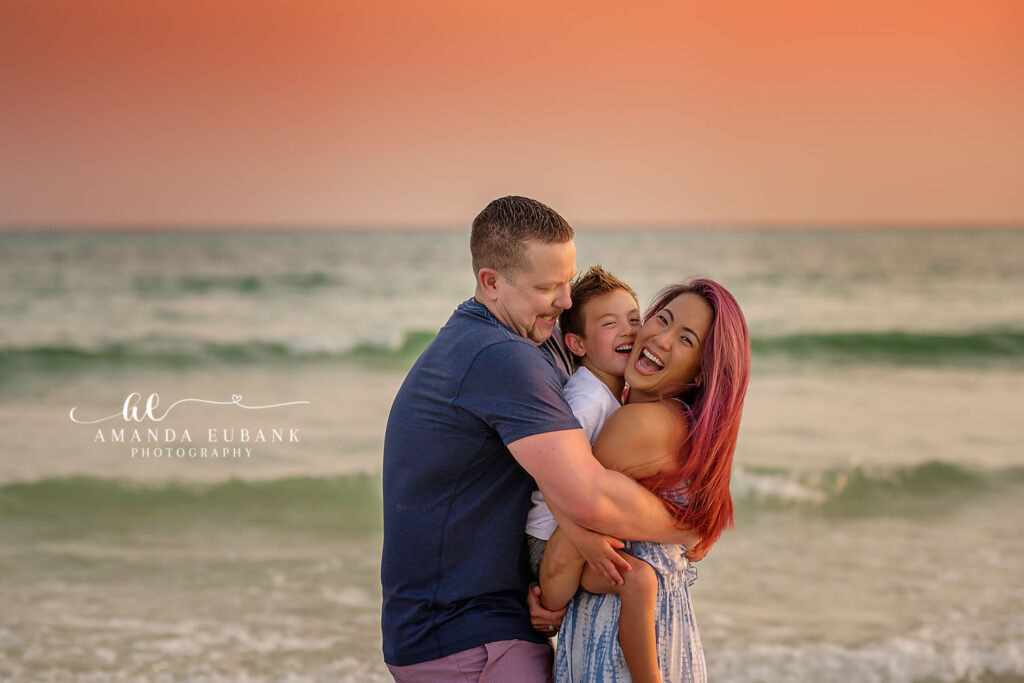
People cluster near the bottom of the stairs they came down. Between walkovers, the sand opens up. I regularly lead families a short way along the beach to reach one of those gaps. It takes a few minutes and changes the background completely.
I decide the direction on the day. Sometimes one way holds a volleyball game and the other holds nothing but sandpipers. A brief walk is also good for the session itself. It gives children something to do, loosens everyone up and produces natural frames of your group strolling beside the Gulf.
Angles That Hide What Is There
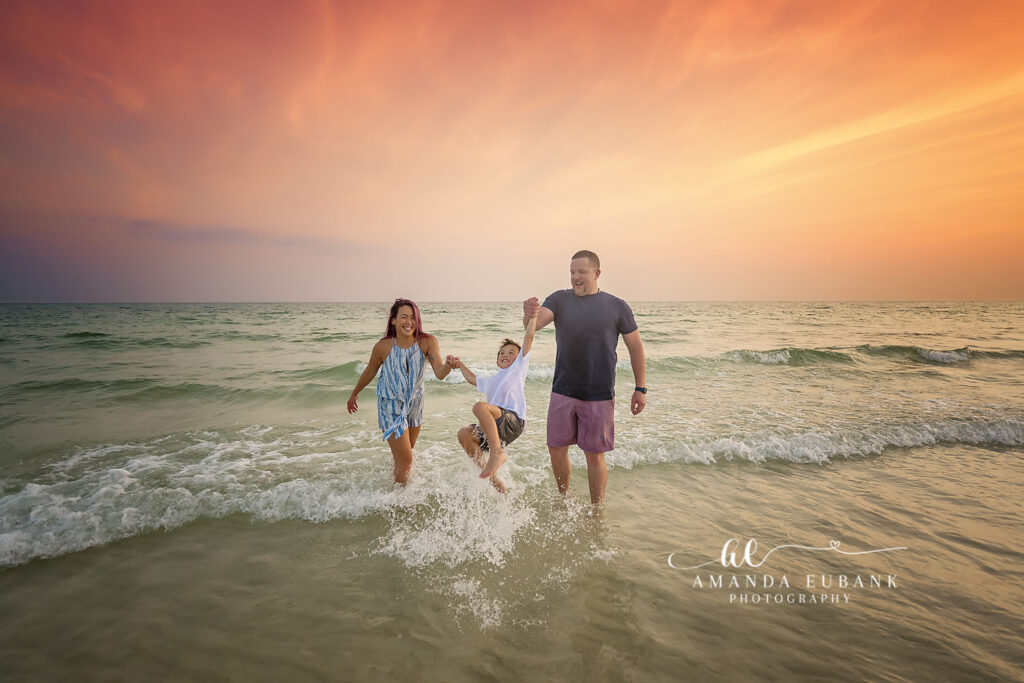
My own position counts for as much as yours. Pointing the camera along the shoreline can reveal every person for half a mile. Turning it toward the water, with you between me and the horizon, shows only sea and sky. Shooting from low down lifts you against the sky and drops distant figures below the frame.
I also use the dunes. With your group placed in front of the sea oats and the camera angled slightly upward, the background becomes grass and clouds. Small shifts of a step or two are often enough to slide a distant stranger behind someone’s shoulder.
Lens Choice and Soft Backgrounds
A longer lens narrows the view. Instead of taking in a wide sweep of beach, it selects a small slice of background directly behind you, and I choose that slice carefully. The same lens blurs anything far away, so a figure in the distance becomes a soft, unreadable shape.
For wide scenes, patience does the job. People on a beach move constantly. I wait for a walker to pass, for a child to run out of the frame or for a couple to turn back toward the stairs. A pause of ten seconds is usually all it takes, and I keep everyone relaxed while we wait.
When Someone Is Still in View
Now and then a person lingers in the background of an otherwise perfect frame. In those cases I recompose, take a second version from another angle or move your group a few yards. I would rather solve it in the camera than rely on editing afterward.
The result is a gallery that looks as though you had Carillon Beach to yourselves. If privacy is a priority, say so when you inquire, and I will suggest the quietest option. Reach me through the contact form or at (850) 660-3200, and compare other communities on my Rosemary Beach photographer page.