

How do tides and wind affect a Seacrest Beach photographer? Tides have little effect. The Gulf rises and falls only slightly along 30A, and the beach looks much the same at any state of the tide. Wind has more influence. It moves hair and clothing and decides how lively the surf is. At Seacrest Beach, the tall dunes give useful shelter when the breeze is strong. I look at both before each session and plan around them. Here is what that means for you, as a Seacrest Beach photographer.
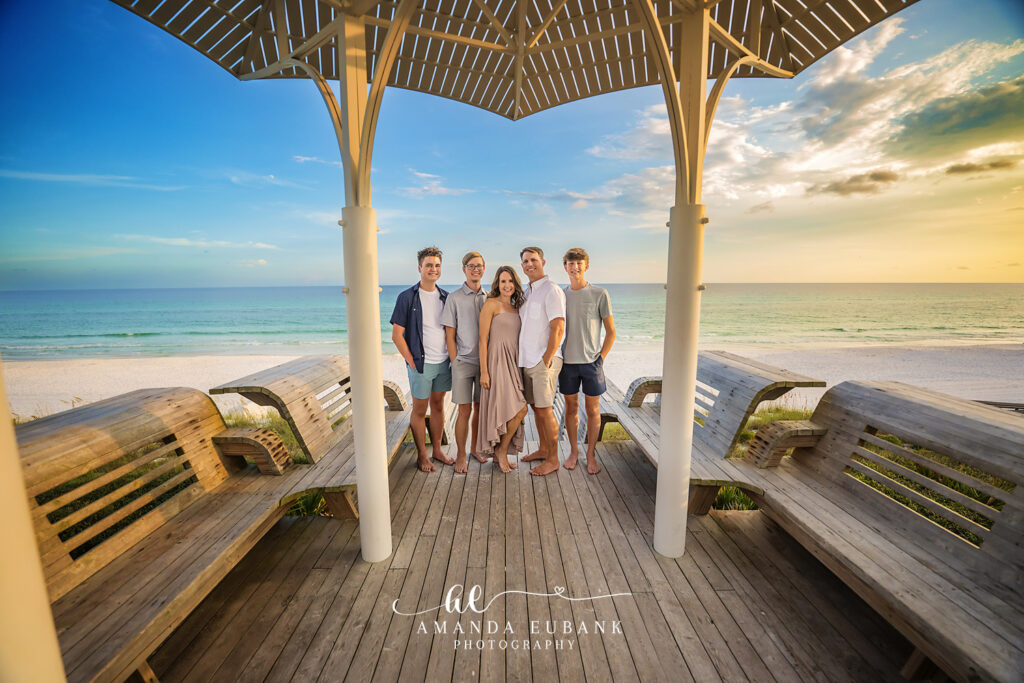
A Modest Tide
On this coast, the tide comes in and goes out gently. The change in water level is small. The beach never disappears, and it never becomes a mudflat. Sessions are timed by the sun, not by the tide.
When the water is lower, there is more firm, damp sand to walk on, and it reflects the sky. When it is higher, the waves reach closer to the dry sand, and we stand a little further up the beach. I take note of it when I arrive. You need not check a tide chart. In practice, the tide changes almost nothing about a session.
Pools Behind a Sandbar
Now and then, when the sea is calm and the water is low, a shallow pool forms between the beach and a sandbar. It is warm, clear and only ankle-deep. Small children are delighted by it.
I use these pools when I find them. Still water mirrors the evening sky, and a child splashing in it makes a memorable frame. They cannot be relied on. The shape of the shore changes from day to day. If there is no pool, the waterline itself gives plenty of scope for play. I arrive early enough to see what the sea has arranged.
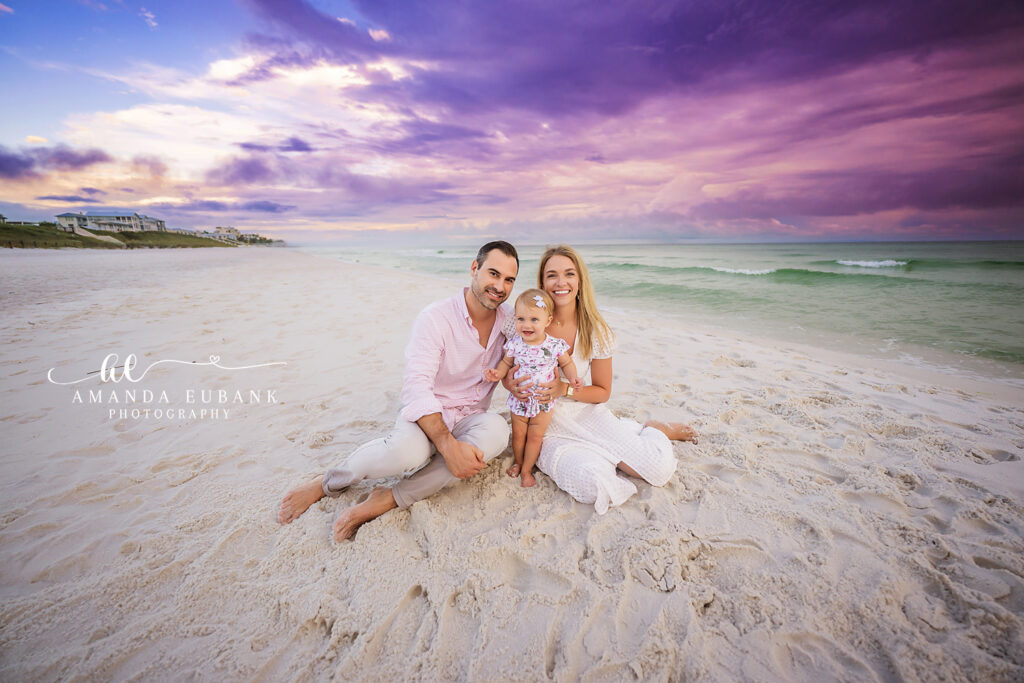
Breeze and Hair
There is nearly always a breeze. A gentle one is an asset. It cools everyone and gives movement to dresses and hair. When it is stronger, I turn people so that it blows hair away from their faces.
You can help by preparing. Long hair is easier loosely tied, braided or half up. A brush and some pins in the bag are a great help. A little hairspray holds shorter styles. I watch for strands across eyes and pause to let you fix them. Wind in the hair often looks lovely. It simply needs to blow in the right direction. That is my concern, and I watch it closely.
Shelter Under the Dunes
The high dunes at Seacrest are more than a backdrop. At their foot, the wind is noticeably lighter. On a breezy evening, I make the more careful portraits there, where hair and clothing behave.
Once those are done, we move out onto the open sand and down to the water, where the wind is welcome. A dress flying or a child’s hair streaming adds energy to the playful frames. Using the shelter first and the open beach second means that the breeze works for us at every stage. It is one of the quiet advantages of this beach.
Flat Water and Rolling Waves
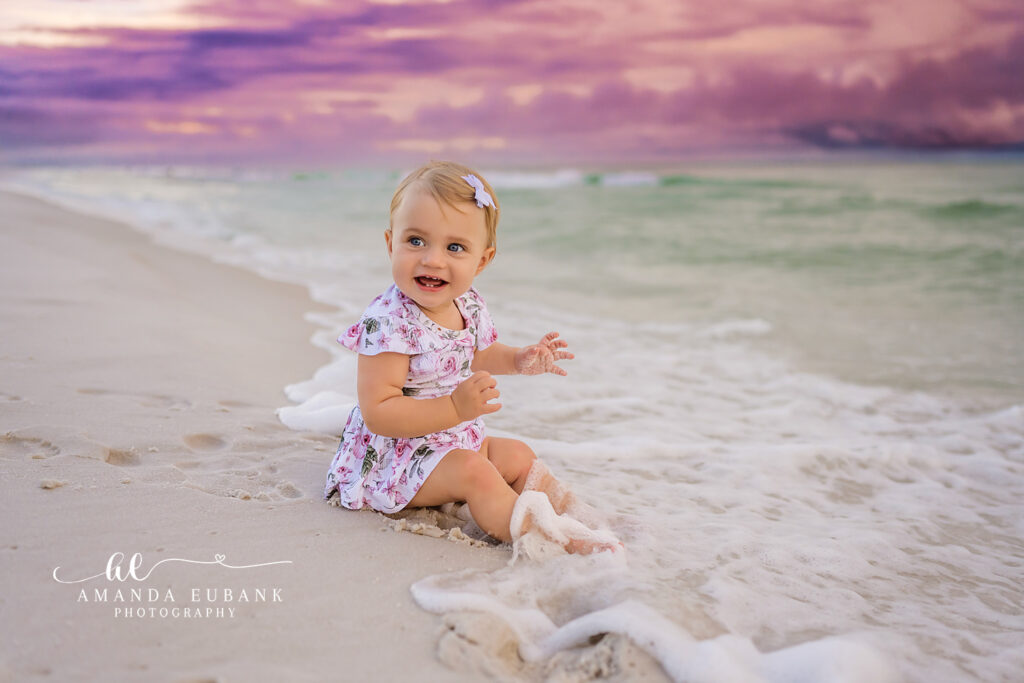
The Gulf has many moods. On some evenings, it is flat and clear, and you can see the sand beneath the surface. On others, there are rolling waves and white foam.
Both photograph well. Calm water is serene and safe for small children at the very edge. Surf adds drama behind a family, who stay on the wet sand and out of the break. Walton County posts flags on its beaches to show the conditions, and I follow them. Nobody is ever asked to go further into the water than is comfortable. The edge of the water is all a portrait ever needs.
My Job, Not Yours
There is no need for you to study the sea or the wind. I look at both when I arrive and adjust where we stand and which way we face. A few steps one way or another makes a large difference.
All I ask is that you dress with a breeze in mind. To arrange a session at Seacrest Beach, write by the contact form or call (850) 660-3200. Still and breezy evenings both appear on my 30A beach pictures page.