
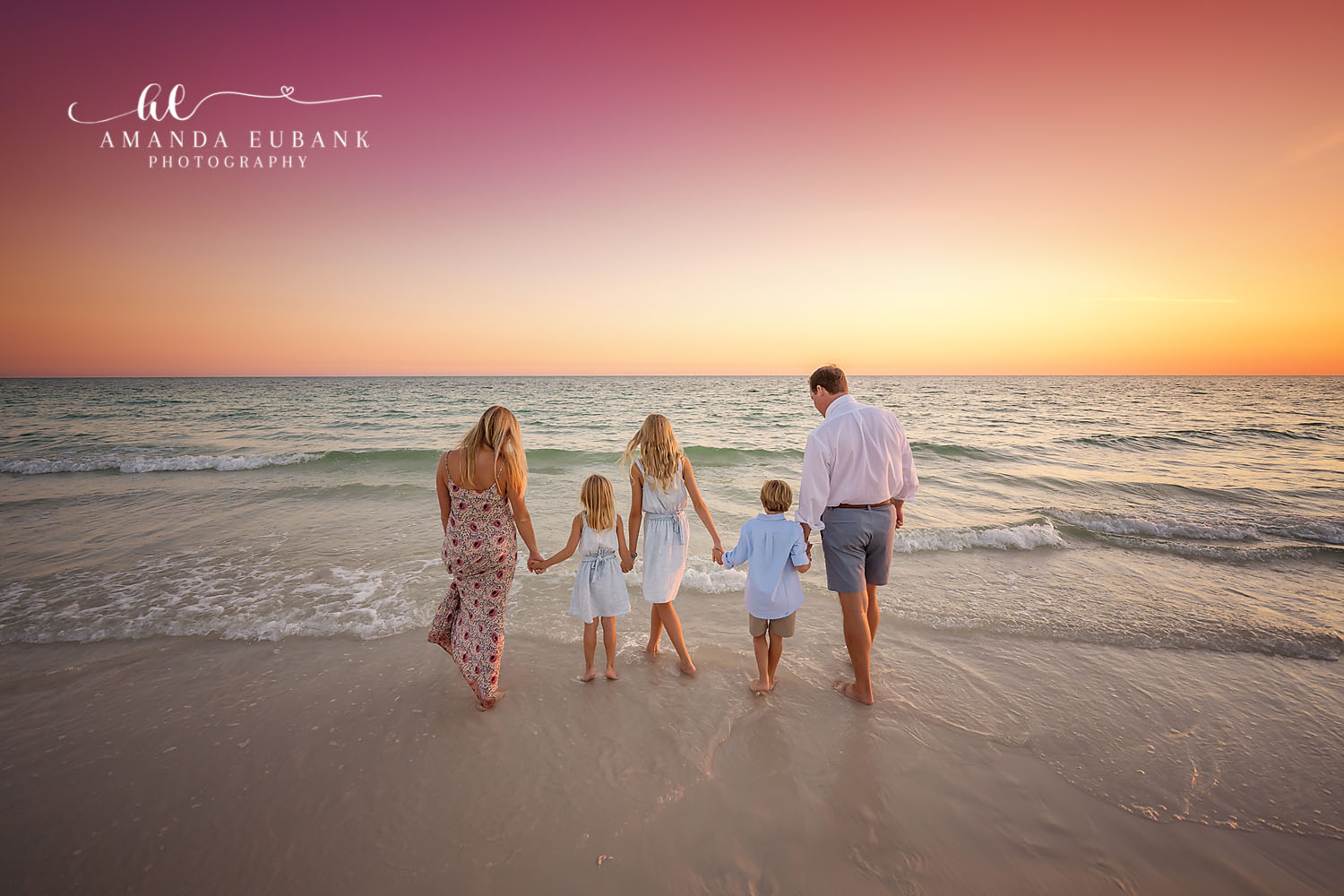
How does a Dune Allen Beach photographer keep strangers out of the pictures? Mostly by choosing the right place and time, and then by careful positioning. Dune Allen Beach makes this easier than almost anywhere on 30A, because it is residential, its public accesses are spread apart and it has no large resort or town center drawing crowds to the sand. Even in summer, open space is usually a short walk away. Here are the methods I use, in order, as a Dune Allen Beach photographer.
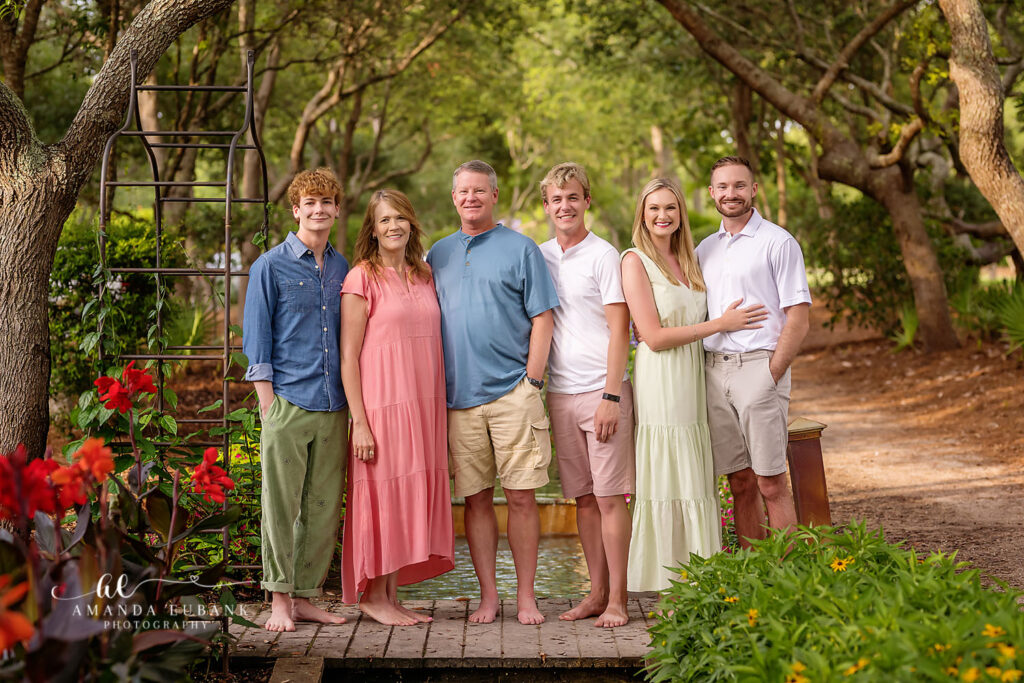
Starting in a Quiet Place
The first step is location. Some communities along this coast have busy central beaches where chairs and umbrellas line the sand until evening. Dune Allen is different. It is made up largely of homes and low buildings, with stretches of shoreline between the public accesses that see relatively few people.
That means I begin with an advantage. Often the only others on the beach are a few neighbors walking at sunset. When clients ask me where on 30A they are least likely to have company in their pictures, the western end is always part of my answer. It is a setting that makes privacy the rule and not the exception.
Sunrise and the End of the Day
Time matters as much as place. At sunrise, almost no one is on the beach. A few walkers and people looking for shells may pass, and that is all. For clients who want complete privacy, morning is the surest choice.
In the evening, most beachgoers pack up well before sunset to shower and go to dinner. By the time the light turns soft, the sand has emptied considerably. Rental chairs and umbrellas, where they exist, are usually taken down late in the day. The beach shortly before dark looks very different from the beach at noon.
Walking Away From the Stairs
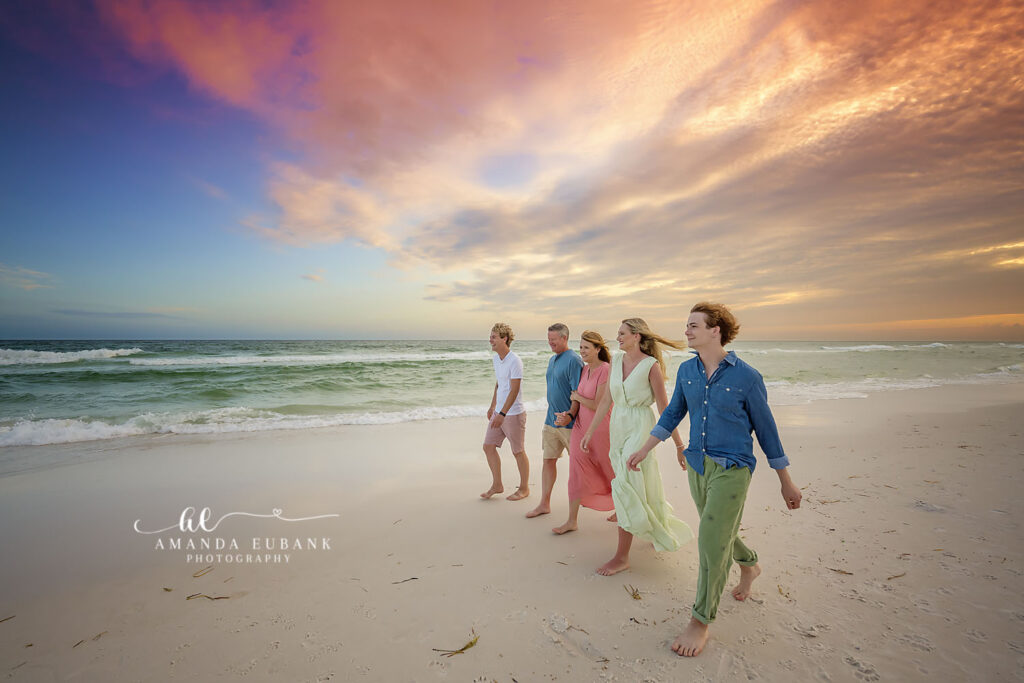
People settle close to where they enter the beach. The area in front of any access is the busiest, and the crowd thins quickly in both directions. I make use of that. After a few frames on the boardwalk, we walk east or west until the sand opens up.
At Dune Allen this rarely takes long. From the Fort Panic access, heading west toward Stallworth Lake, the beach becomes very quiet. The short walk is easy on firm sand near the water, and children usually treat it as part of the fun.
Angles and Backgrounds
Position does the rest. If a family is sitting to the east, I photograph facing west. If walkers are passing along the waterline, I turn you toward the dunes, where sea oats make a clean background. A low camera angle can hide distant figures behind a rise in the sand.
I also change how much of the scene I include. A closer frame leaves out whatever is at the edges. Throughout a session I am scanning the background as well as watching you, and I shift a few steps whenever something unwanted appears behind. None of this requires anything from you beyond turning when I ask.

Patience and Courtesy
Sometimes the simplest method is to wait. A couple strolling by will be gone in a moment. I pause, chat with you and resume when the view is clear. Those pauses are useful anyway, since they give children a rest.
The beach is public, and everyone has a right to enjoy it. I never ask other visitors to move from where they have settled. Most people, seeing a portrait session, kindly step around on their own. A friendly word and a little patience go a long way, and the mood of the session stays pleasant.
Holiday and Peak Periods
During spring break, the Fourth of July and other peak weeks, the whole coast is fuller. Even then, the methods above work. I may recommend sunrise more strongly, or choose the most open stretch west of Fort Panic. With planning, your gallery can look as though you had the beach to yourselves.
If privacy is especially important, say so when you inquire, and I will plan around it. To ask about dates at Dune Allen, write via the contact form or call (850) 660-3200. Other quiet beaches are shown on my Blue Mountain Beach photographer page.