
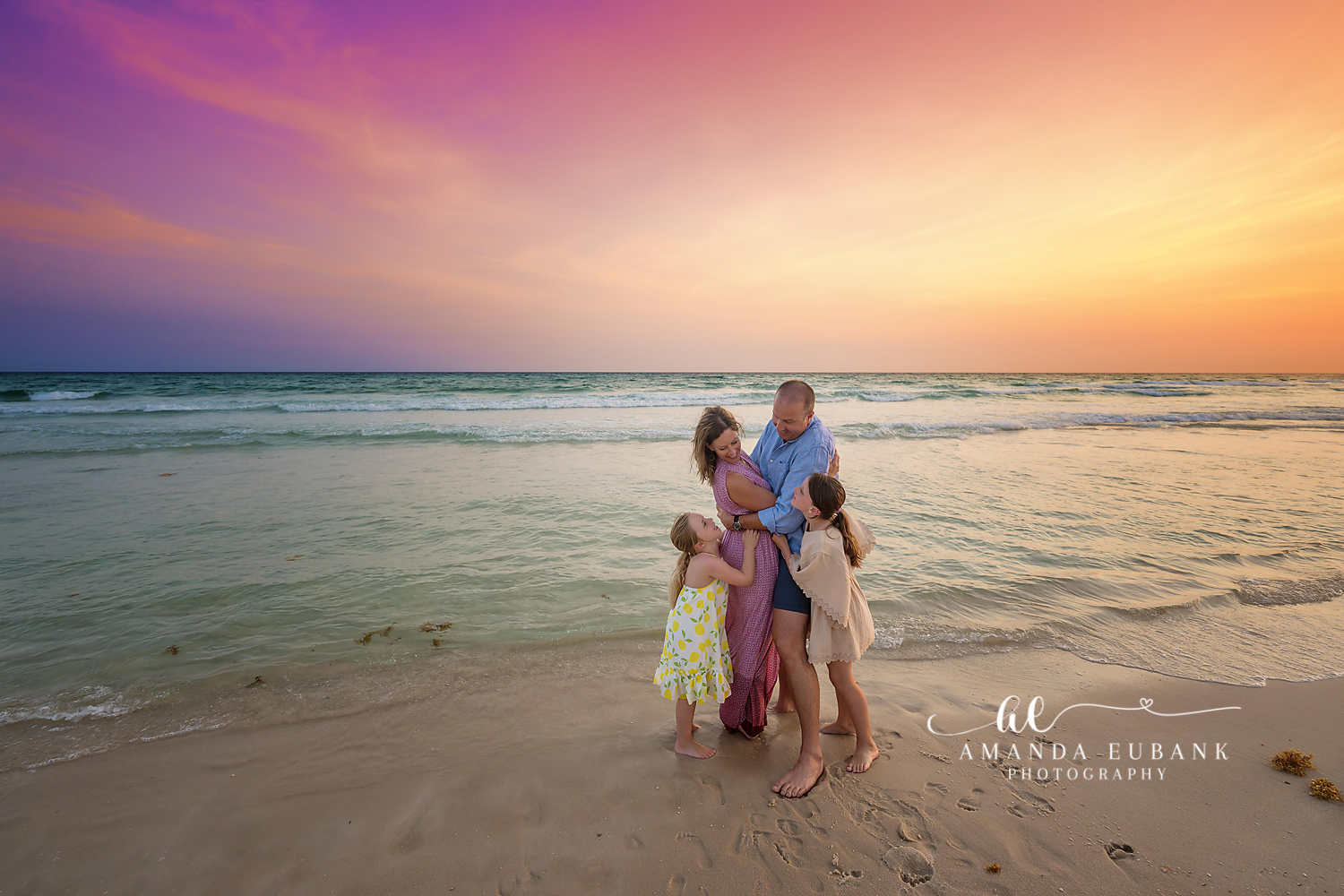
Which stretch of shoreline does a Dune Allen Beach photographer prefer? It depends on the group, but three stretches do most of the work. The sand below the Dune Allen Regional Beach Access, the long, open reach west of Fort Panic and the area where Oyster Lake meets the beach. Each has a slightly different character. Dune Allen Beach is the western end of Scenic 30A and one of its quietest communities, so all three are calm by local standards. Here is how I choose among them as a Dune Allen Beach photographer.
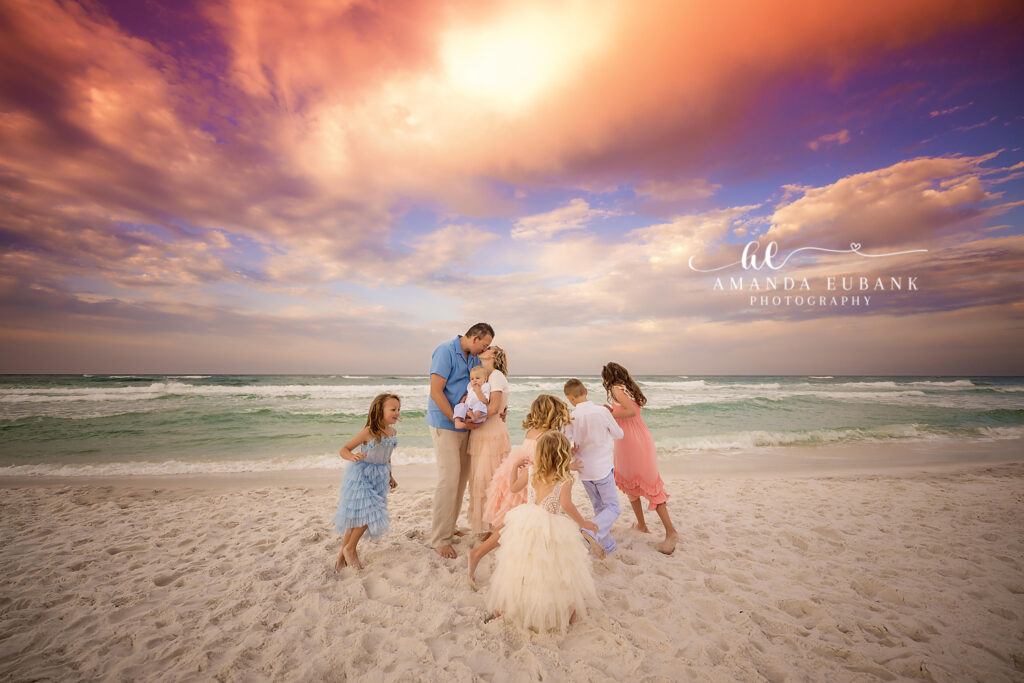
Below the Regional Access
The Dune Allen Regional Beach Access is the most convenient starting point. It has parking, restrooms and a boardwalk across the dunes, and the sand at the bottom is wide. For families with small children or older relatives, the short, easy approach is a real advantage.
Once on the beach, I walk the group a little way from the stairs. Within a short distance the other visitors thin out and the background becomes simple. Dunes and sea oats rise on one side, the Gulf lies on the other and there is plenty of room between them to work.
West of Fort Panic
The Fort Panic Regional Beach Access opens onto what I consider the most open sand in the community. Looking west, the shore runs on toward Stallworth Lake and Topsail Hill Preserve State Park, and there is little to interrupt the view.
I choose this stretch for clients who want a spacious, natural look and for evening sessions in particular. As the sun lowers toward the western end of the beach, the light rakes across the sand and brings out its texture. Groups of any size fit comfortably here, and it is rare to have anyone else nearby.

Where Oyster Lake Meets the Beach
Oyster Lake drains toward the Gulf near the Lake Causeway access. Coastal dune lakes open to the sea only from time to time, and when this one does, a ribbon of dark water crosses the white sand. Even when it is closed, the low area where the lake approaches the beach has its own look.
This spot adds variety. Children are drawn to the shallow water, and the meeting of lake and Gulf makes an unusual background. The pedestrian bridge and the grassy banks just inland give still more options, all within a few steps of the shoreline.
The Eastern End by Ed Walline
At the eastern edge of Dune Allen, the Ed Walline Regional Beach Access sits opposite Gulf Place. It has pavilions, an elevated viewing platform and accessible facilities. The beach here can be livelier than the rest of the community, since restaurants and shops are across the road.
I use it when accessibility is the priority, or when a client wants to combine the beach with the colorful setting of Gulf Place. With a little care in choosing the angle, the background remains clean. For grandparents in particular, the short, level approach can decide the matter. The platform also offers a view down onto the sand that the other accesses lack.
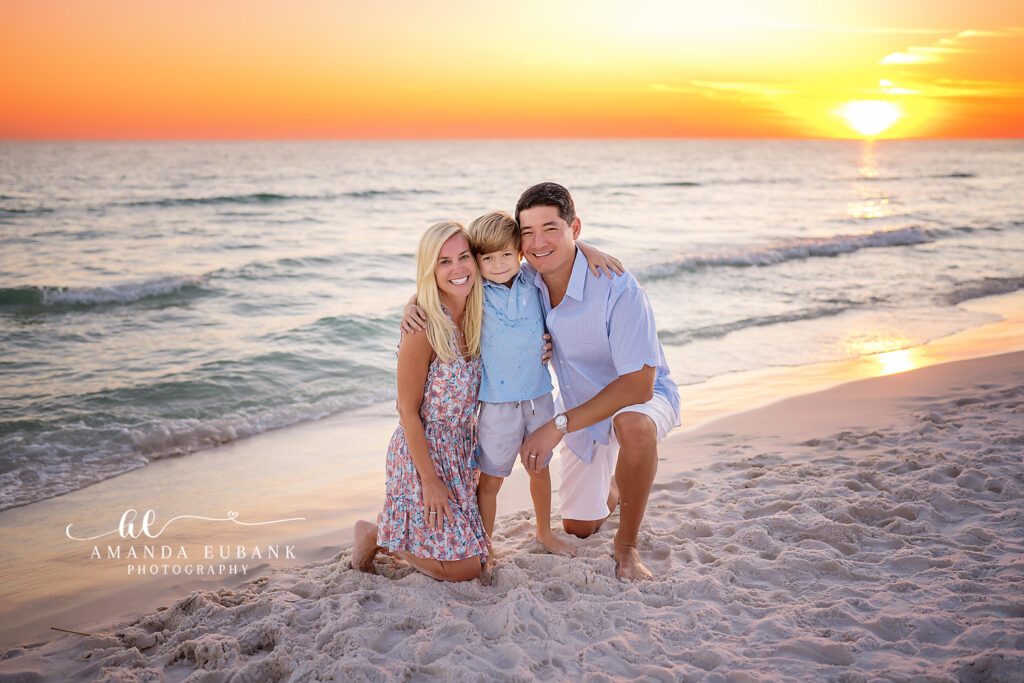
What I Look For on Any Stretch
Wherever we are, I look for the same things. A background free of umbrellas, chairs and tents. Dunes with healthy sea oats. Firm sand for standing and soft sand for sitting. Enough distance from the access that foot traffic is light.
I also watch the direction of the light. The sun should fall softly on faces or glow from behind, never glare straight into eyes. A few steps east or west can change that. On a beach as open as Dune Allen, I have the freedom to place people exactly where the light and the background agree.
Starting From Where You Stay
If your rental has its own path to the beach, the best stretch may be the one outside your door. Arriving on foot is easy for everyone, and many of the homes here face lovely, quiet sand. Send me the address and I will consider it.
Tell me about your group as well, including ages and any difficulty with walking. To begin planning, reach me through the contact form or call (850) 660-3200. Other nearby beaches are shown on my Blue Mountain Beach photographer page.